
The Project
Beswick Refrigeration Services (BRS) attended site to complete a planned preventative maintenance (PPM) visit on an indoor unit.
This wasn’t a reactive breakdown.
This was exactly what PPM is for: find the hidden problems before they become expensive ones.
The Core Problem
During the PPM inspection, BRS identified:
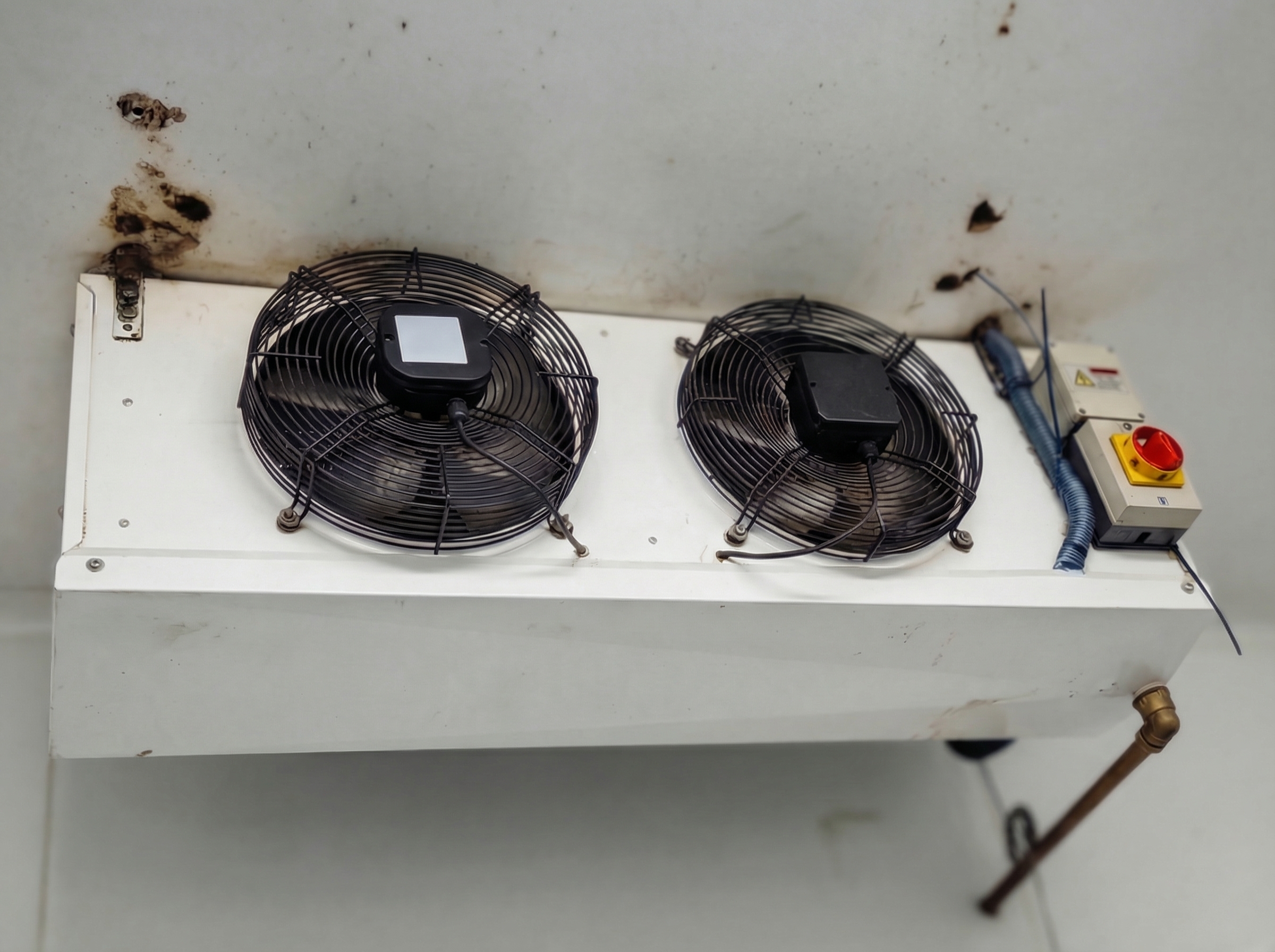
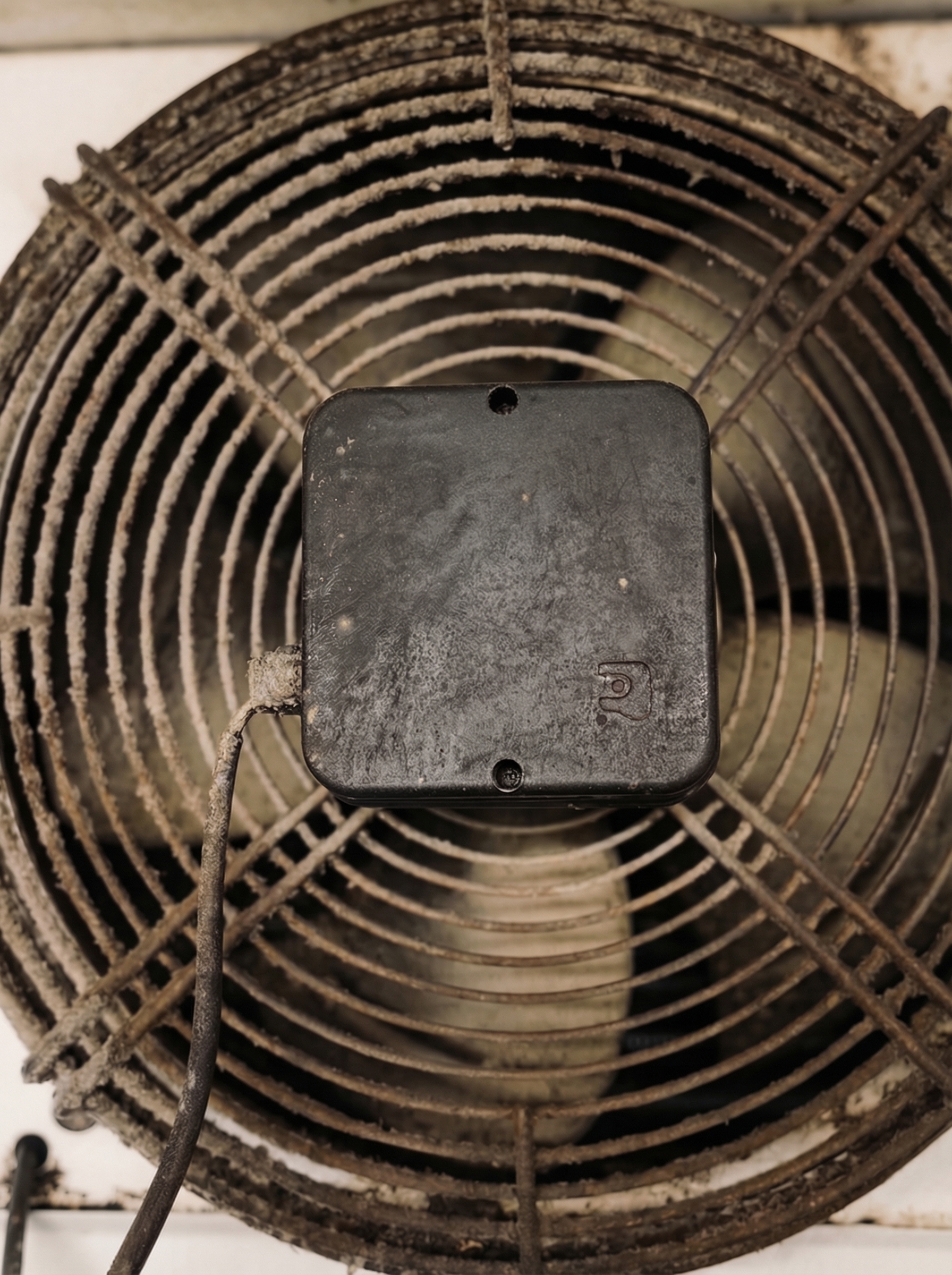
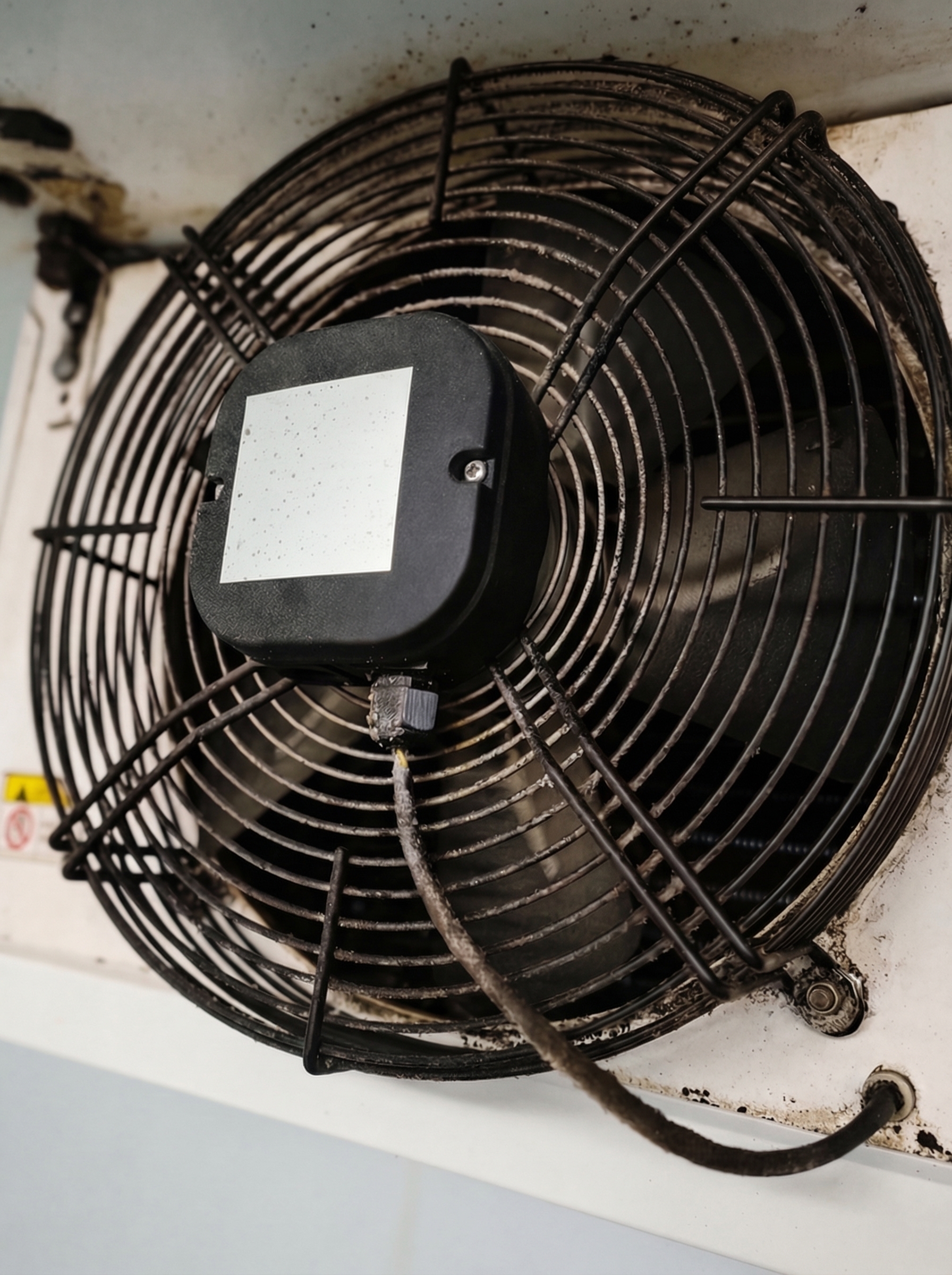
- Mould build-up around the evaporator fans
- Contamination inside the lower blower section of the indoor unit
This is more than “it needs a clean”.
It can mean:
- Reduced airflow and poor heat transfer
- Higher fan load and unnecessary run time
- Increased chance of nuisance faults and call-outs
- Hygiene concerns in temperature-controlled areas
- Increased scrutiny during audits (food safety, quality, or compliance checks)
The Challenge: High Hygiene Standards, Tight Access, No Appetite for Disruption
Indoor units are rarely installed with “easy access” in mind.
You’re working in confined spaces, around live operations, and with a system the client expects to keep running.
This is the same operational reality whether it’s:
- Bakery cooling system servicing
- Dairy refrigeration preventative maintenance
- Or pharmaceutical cold room PPM where compliance tolerance is basically zero
PPM needs to be decisive, clean, and controlled.
The Sequencing: How BRS Worked Around Live Operations
BRS kept this job tight and methodical.
Step 1: Strip-down for access (not a “wipe-and-go” clean)
The evaporator fans were removed to expose the affected areas properly.
That matters.
If you can’t access it, you can’t clean it.
Step 2: Targeted chemical cleaning of the contaminated sections
BRS carried out a thorough chemical clean of the impacted components and internal surfaces.
This wasn’t cosmetic.
It was about removing build-up that affects airflow, hygiene, and reliability.
Step 3: Reassembly and prove-out
After cleaning, the unit was reassembled and tested to confirm correct operation.
No guesswork.
No “we’ll see how it goes”.
The Technical Solution: PPM That Actually Protects Performance
Removing the mould was only half the job. The real value was in the full PPM we ran alongside it, verifying the reliability and hitting every compliance check so the client doesn’t have to worry about a surprise breakdown next week.
Pharmaceutical cold room PPM: compliance-first checks (applies across all sectors)
The visit included leak testing to meet F-Gas requirements.
That’s not optional. It’s baseline compliance.
Process cooling reliability audits: checks you can trend and act on
BRS completed:
- Full component checks
- Inspection of electrical connections
- Recording relevant electrical readings to confirm components are operating correctly
This is what turns maintenance into control.
Readings let you spot drift early, before motors, fans, or controls fail under load.
Industrial glycol system maintenance mindset (even when this isn’t a glycol loop)
Different plant. Same discipline.
Whether you’re maintaining an indoor DX unit or managing industrial glycol system maintenance, the principle is identical:
- Identify contamination early
- Restore heat transfer and airflow
- Verify electrical integrity
- Reduce risk before it becomes downtime
The Result
We aren’t just there to tick boxes and wipe down covers; we’re there to find the small, quiet issues before they turn into a 2:00 AM emergency phone call.
When your plant is running at 100%, maintenance should be invisible. It’s about catching that worn bearing or blocked line now, so you aren’t staring at a dead production line later, wondering where it all went wrong
Reliability isn’t an accident; it’s the result of looking for the problems nobody else has noticed yet.
Outcomes delivered:
- Zero Downtime: Work completed as part of planned PPM, not an emergency shutdown
- Energy Savings: Restored airflow and cleanliness helps reduce efficiency drag (less run time fighting blockages and poor heat exchange)
- Reliability: Reduced risk of nuisance trips, poor airflow complaints, and repeat contamination build-up
The “So What?”: What This Stopped the Client From Losing
Mould inside an indoor unit doesn’t just look bad.
It can cost real money, fast:
- Emergency call-outs at the worst time
- Lost production time while areas are cleaned and checked
- Hygiene risk in sensitive environments
- Audit pressure and the uncomfortable conversations that come with it
Regular PPM turns that whole situation into a controlled, scheduled job.
Exactly as it should be.
If you’re relying on “it’s still running” as your maintenance strategy, you’re gambling.
Book a proper PPM plan, built to protect uptime, compliance, and system performance:
https://beswickrefrigeration.co.uk/contact/