
Not every process engineering project starts with a blank sheet of paper.
Sometimes the job is to remove what is there, work out what is still worth something, and make the best possible use of it while longer-term plans take shape. That is exactly what this process plant removal project involved.
BRS was engaged by a food and drink manufacturer to carry out the removal of an existing brine and improver system from their production site. The plant was no longer required in its current configuration following a site reconfiguration. Part of the removed kit would go to scrap. The remainder would return to the BRS process engineering workshop at Rugeley, to be reconfigured, refurbished and reinstalled as a working temporary brine solution while the site programme continues.
The process plant removal ran across several days, required specialist machinery movers working alongside the BRS process engineering team, and demanded careful on-site separation of assets before anything left the premises.
The Starting Point: An Old Brine and Improver System That Had Run Its Course
The system in question was a multi-vessel brine and improver setup installed within the client’s production area. Rows of stainless steel process vessels, fabricated pipework, ancillary equipment and associated services had served the site well, but the site’s operational requirements had changed.
Rather than a straightforward process plant removal and total disposal, the engineering decision was to assess each component individually. Best practice in food manufacturing decommissioning starts with a structured inventory of all salvageable equipment before committing any item to scrap. Stainless steel vessels in particular tend to retain meaningful value when properly maintained, and the vessels on this site were candidates for recovery. Some items had reached the end of their useful life and would be scrapped. Others, the vessels in better condition and the reusable framework sections, were worth reconditioning. With workshop attention, they could be reconfigured into a functional temporary brine system to support production at another location.
The first step was getting everything out cleanly, without disrupting the surrounding plant or damaging the assets earmarked for reuse.
How the Process Plant Removal Was Managed on Site
Coordinating specialist machinery movers
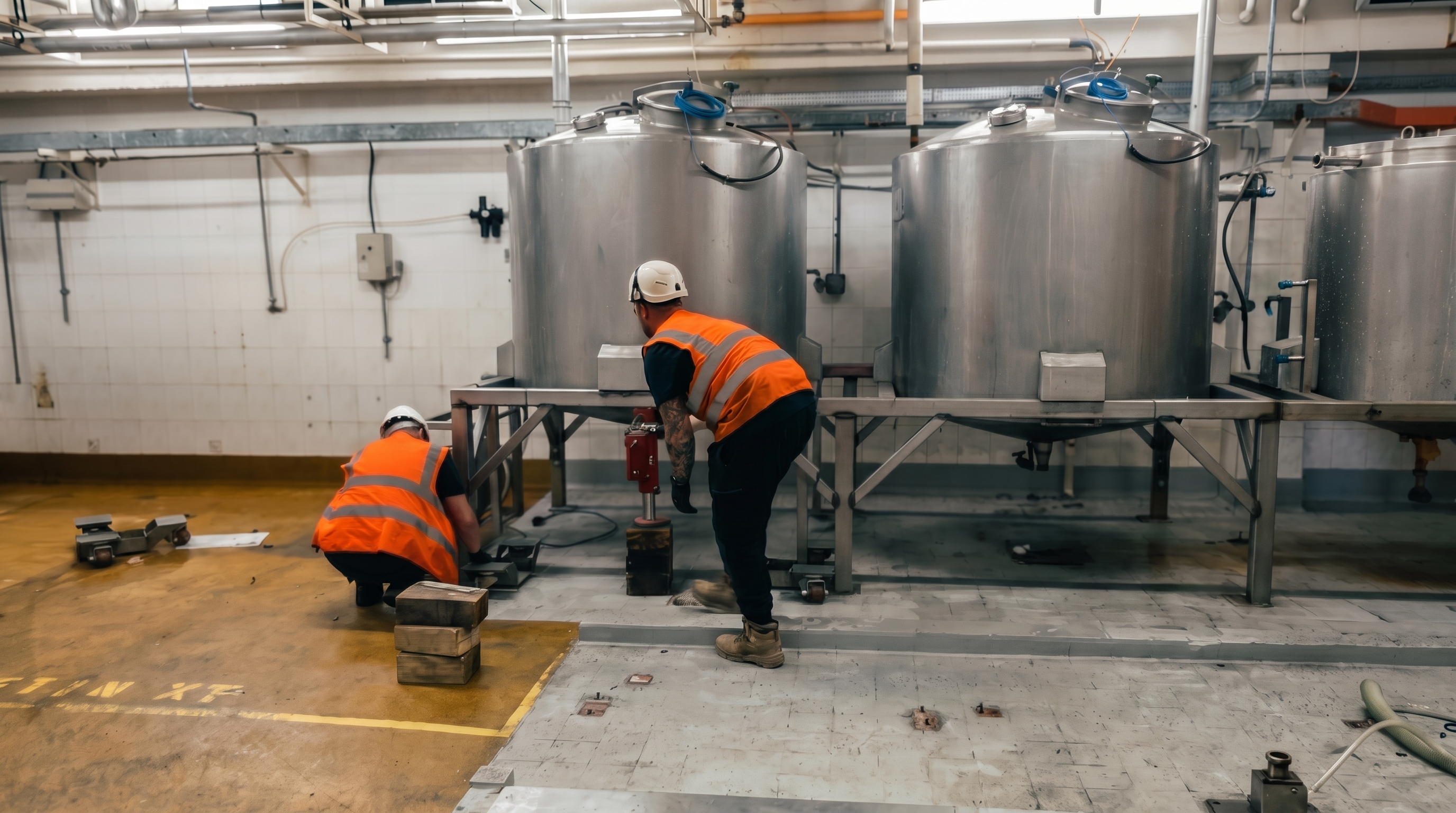
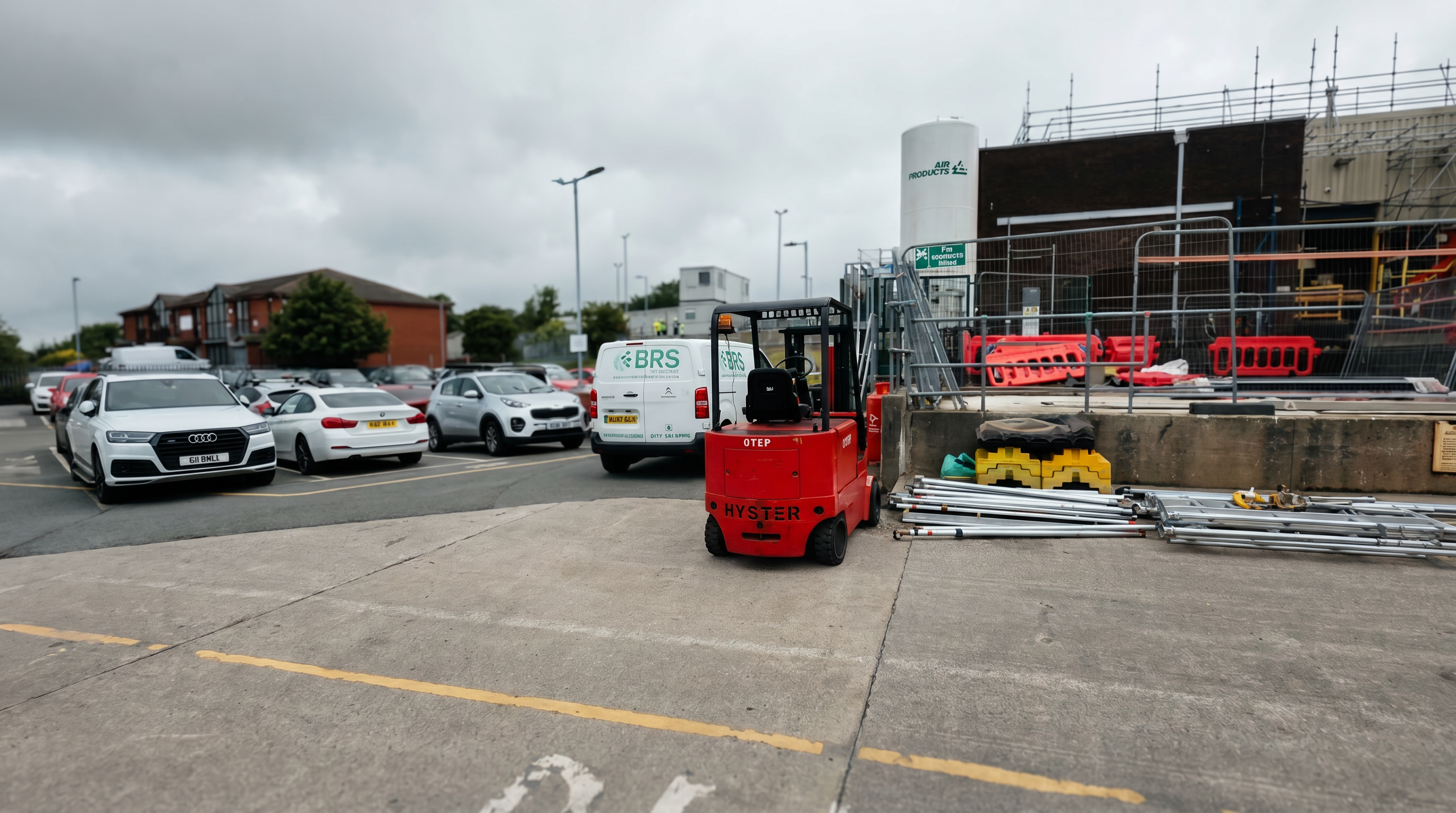
Process plant of this scale and weight does not come out with a trolley. BRS worked alongside TEP, a specialist machinery movement contractor, whose team brought a Hyster forklift into the production environment to extract the vessels once they were freed from their installation framework.
Working inside an active food manufacturing environment requires a different approach to a standard industrial clearance. Access routes, floor loading limits, the proximity of other active plant and the hygiene constraints of the production area all need to be assessed before the first bolt comes out. A 2026 guide on industrial machinery decommissioning from Silver Knight notes that the HSE Fee for Intervention rate for material breaches found during industrial decommissioning now sits at 188 pounds per hour, which underlines why sequencing and safety planning are not optional extras on a process plant removal project. The job was sequenced to extract the largest and heaviest items first, clearing space progressively and reducing risk as the work moved through the plant room.
Staging and sorting outside the plant room
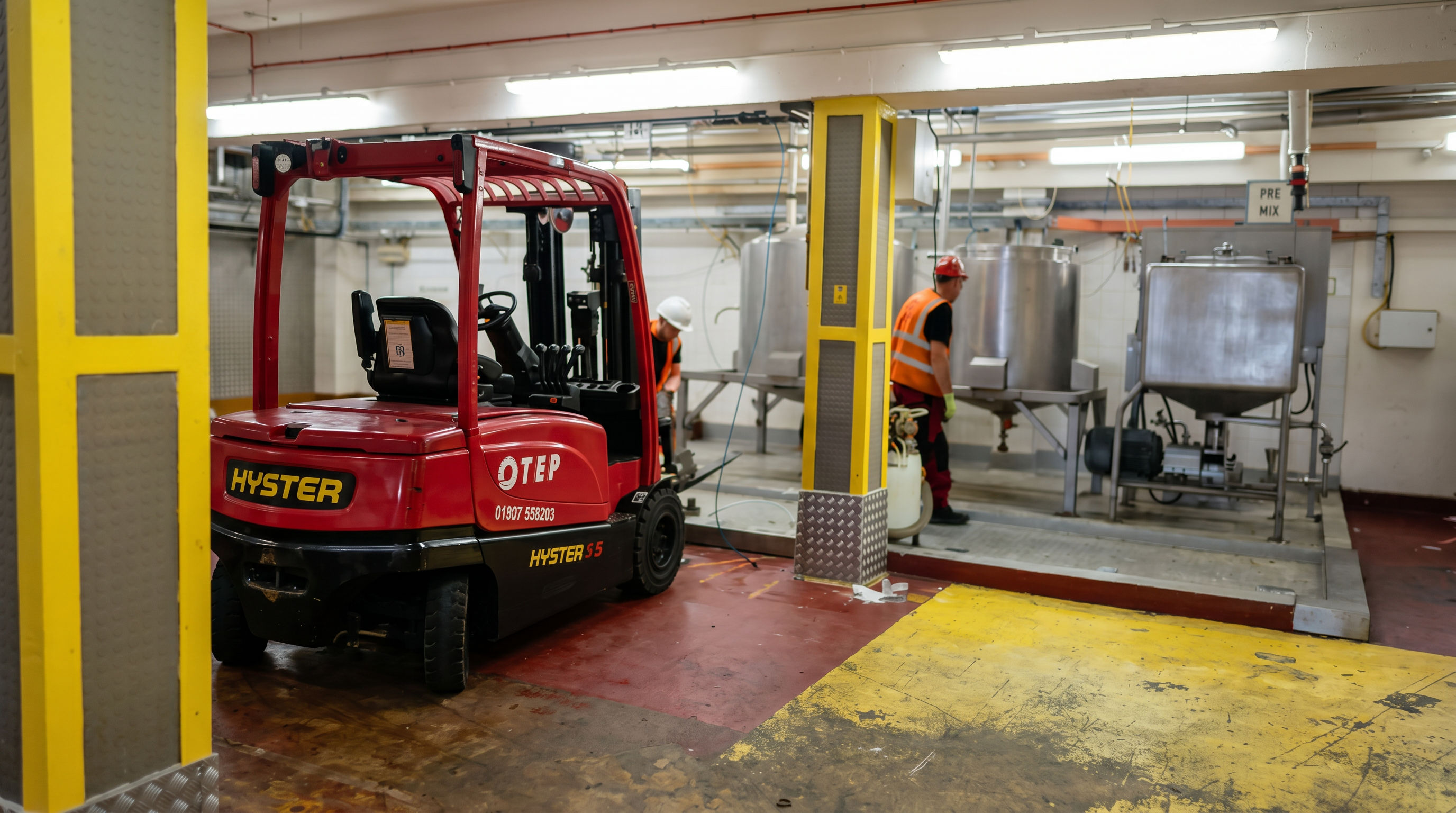
Once removed from the food manufacturing site, assets were staged in the exterior yard for triage. This is where the separation decision was made in practice: framework sections, pipework runs and ancillary components assessed against what the temporary brine system would require. As NIRAS, the food and beverage engineering consultancy, notes in their food factory decommissioning guidance, properly managing the disposal and recovery of plant and machinery at this stage can make the overall process plant removal project cost-neutral. Items going to the BRS workshop were separated and secured for transport. Those beyond economic recovery were prepared for scrap.
Loading and transport to the BRS workshop
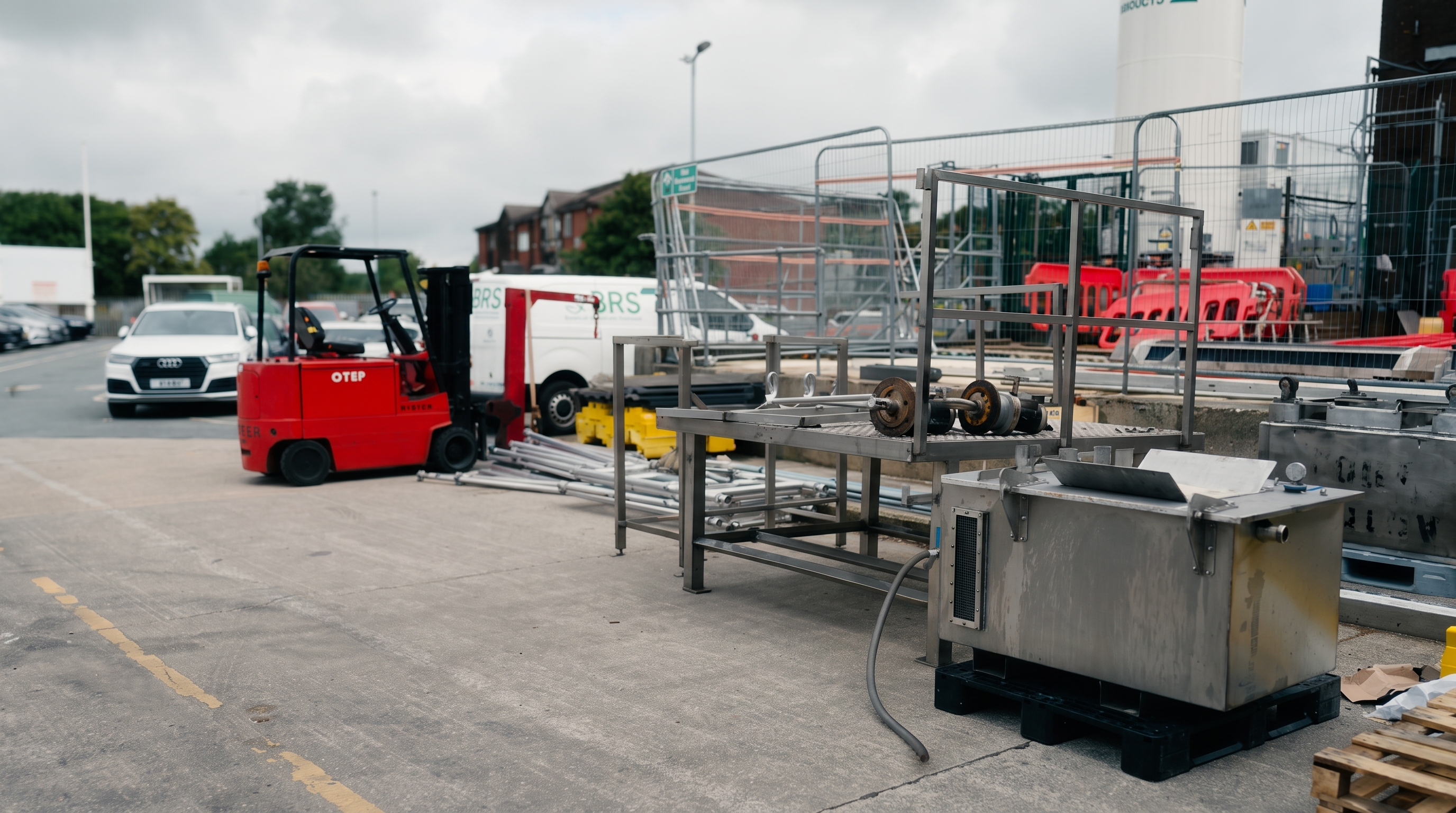
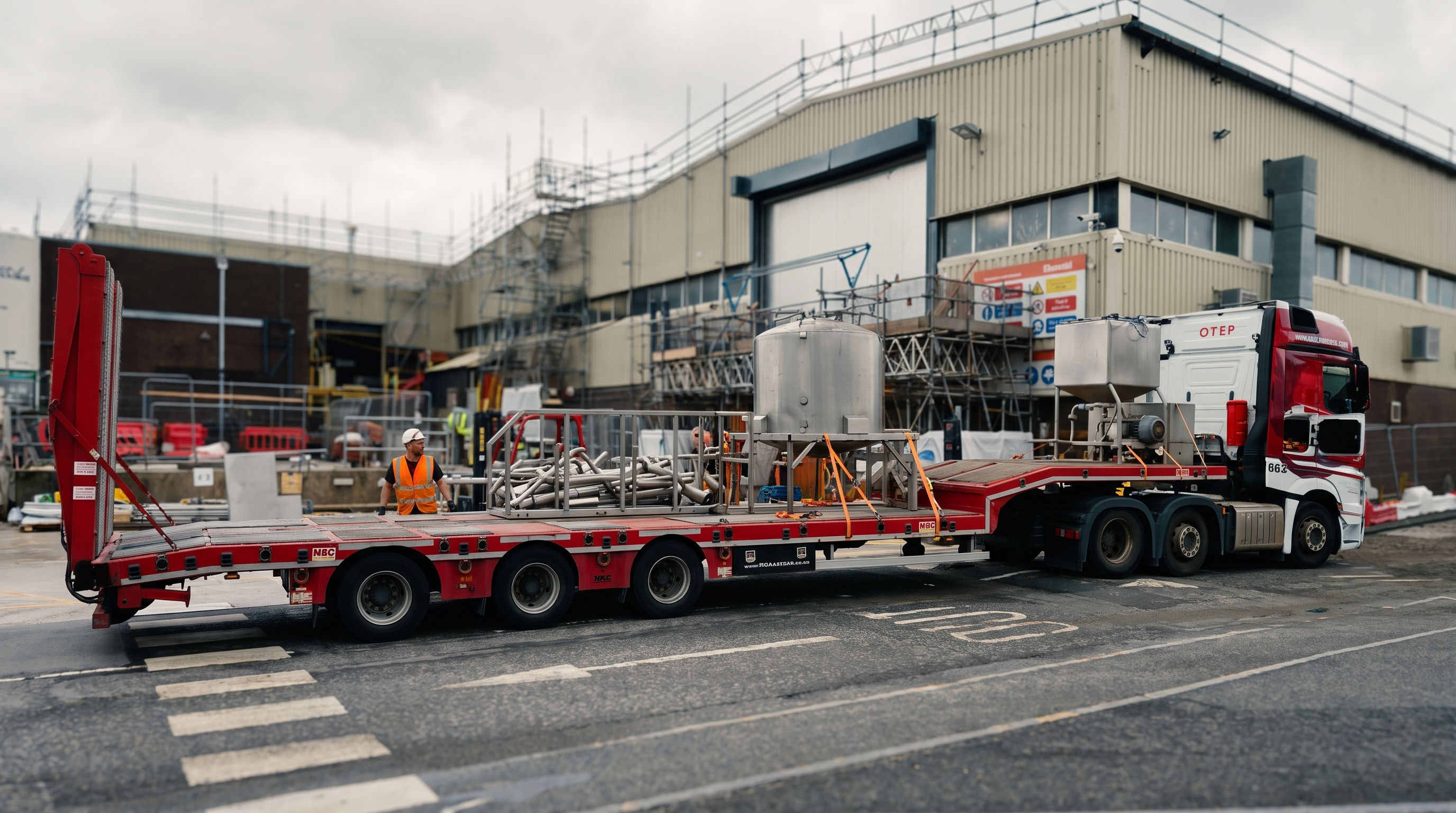
The vessels and structural components earmarked for reconditioning were loaded onto TEP low-loader transport for the run back to the BRS Rugeley process engineering facility. The stainless steel vessels sitting on the flat-bed show the condition they came out in: serviceable but requiring workshop attention before reinstallation as the temporary brine system.
The Result on Site: A Clean Footprint Ready for the Next Phase
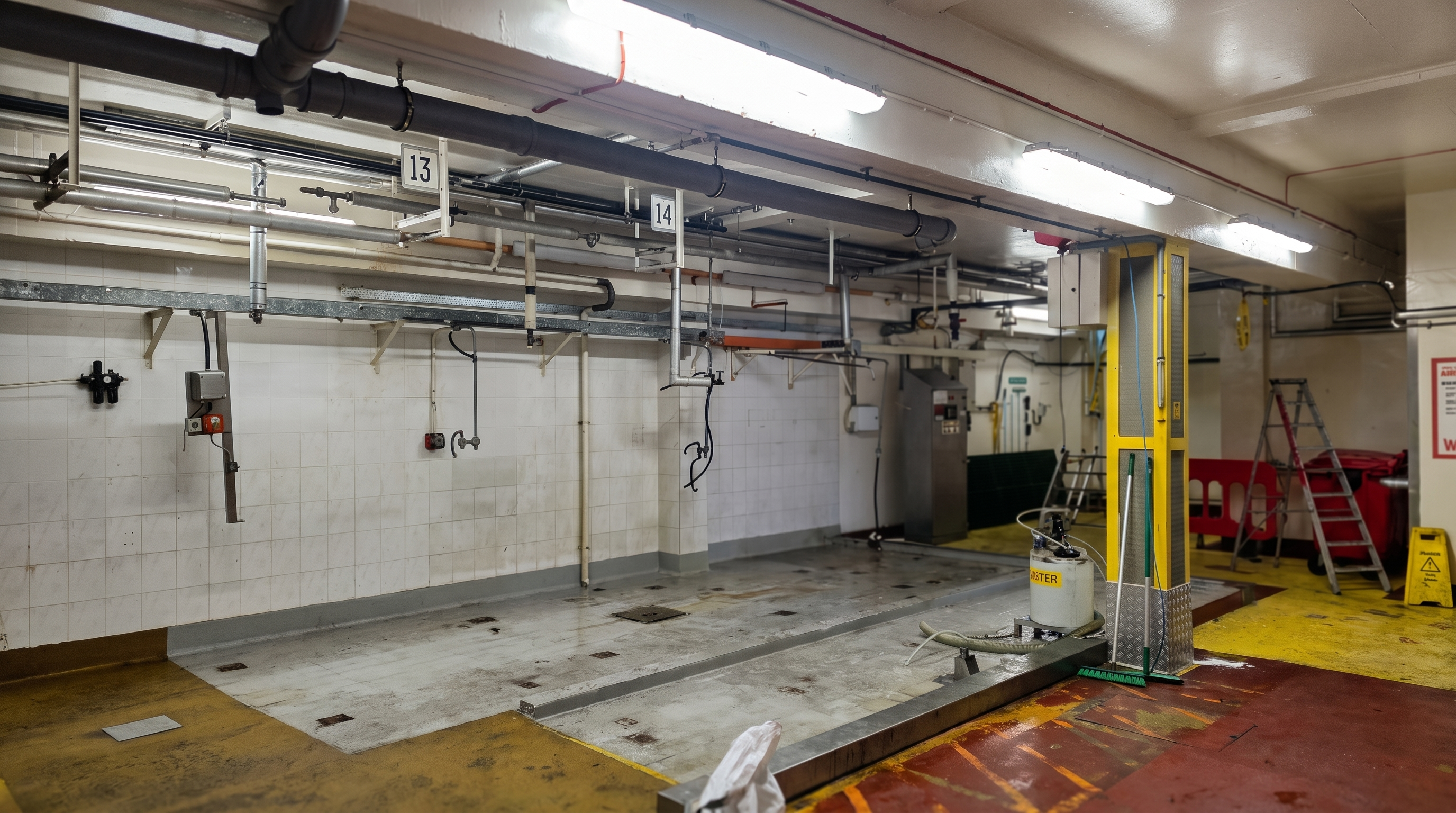
With the process plant removal complete, the client’s production area is cleared. The floor footprint is fully exposed, services are capped off, and the space is ready for whatever the site reconfiguration requires next. There is no rushed replacement plant filling the gap. The client has a clean, documented starting point.
The recovered vessels and components are at the BRS Rugeley workshop for reconditioning into the temporary brine system. The reconfigured plant will be tested and ready for reinstallation on a programme that fits the client’s operational requirements rather than a reactive timeline forced by a breakdown.
Why Asset Recovery Deserves More Thought in Process Plant Removal Decisions
Most process plant removal projects in food manufacturing default to the same call: get it out, skip the assessment, send the lot to scrap. On large-scale demolition projects with tight programmes, that sometimes makes sense. On a working food production site where some of the removed plant is still structurally sound, it frequently leaves money and operational flexibility behind.
The alternative, a proper triage at the point of process plant removal against what the site needs in the short term, takes more time upfront but produces a better outcome. In this case, the recovered vessels form a working temporary brine system rather than requiring the client to procure and install new plant on a reactive basis. The cost difference is meaningful.
The temporary solution is underrated
Food production sites rarely have a clean changeover window. Capital projects take time to specify, approve and programme. In the gap between removing old plant and installing new, production still has to run. A reconditioned temporary system, built from recovered assets that the site’s engineering team already understands, is often a more reliable bridge than hire plant or an accelerated procurement that cuts corners on specification. BRS’s process plant engineering capability covers the recovery and reconditioning work and the eventual permanent installation together, so the temporary solution is designed with the permanent one in mind from the start.
What makes process plant asset recovery viable
Not every piece of removed plant is worth recovering. The decision comes down to three things: the structural condition of the vessel or component, whether reconditioning is cheaper than procuring a new equivalent, and whether the reconfigured item meets the hygiene and process requirements of its next application.
Stainless steel vessels used in food production are often in better structural condition than they appear after years of service. Surface contamination, worn seals and outdated controls are all workshop-fixable. The vessel body, if properly specified at installation and free from serious corrosion or mechanical damage, typically carries years of useful life remaining. That is the assessment BRS makes at the point of process plant removal, not after the material has already left site.
The scrap decision matters too
The other half of the triage, deciding what goes to scrap, is as important as identifying what to recover. Holding onto plant that has genuinely reached end of life creates storage cost, programme risk and eventual disposal cost. A clear-eyed assessment at the point of process plant removal that separates recoverable from unrecoverable produces a cleaner project outcome and a more useful site.
How BRS Approaches Process Plant Removal in Food Manufacturing
BRS has delivered process plant engineering for food and drink manufacturers, pharmaceutical sites and wider industrial environments for over 40 years. The Rugeley process engineering facility handles fabrication, reconditioning and assembly work in-house, which means a process plant removal project with a recovery element can be managed as a single scope rather than split across a removal contractor and a separate fabricator.
For clients running a site reconfiguration or capital project where existing plant needs to come out, BRS can manage the full scope: process plant removal, asset triage, workshop reconditioning and reinstallation of the temporary or permanent replacement system. The turnkey process engineering capability covers the whole journey from initial removal programme through to commissioning of the replacement plant, with one team responsible throughout.
If a process plant removal, site reconfiguration or asset recovery project is coming up, the BRS process engineering team is worth talking to before the removal programme is fixed. Getting the recovery assessment done at the planning stage produces a better outcome than trying to reverse engineer it once the plant has left site.
Contact BRS: enquiries@beswickrefrigeration.co.uk | 0161 430 8380
Explore BRS process engineering and plant removal capability at beswickrefrigeration.co.uk/process-engineering/


